Page 6 of 8

Green Roofs and Agriculture

There has been increasing discussion in some cities about the possibilities for urban agriculture on green roofs. Toronto, Vancouver, New York and Chicago all have food-producing green roofs, and London is starting two pilot projects.  You can find out more about these roofs here.

Productive restaurant rooftop in Chicago- Uncommon Ground

USGBC launches LEED for Neighbourhoods

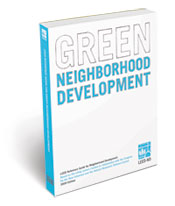
After a two and a half year pilot the USGBC has launched it’s LEED for Neighbourhoods (LEED ND), further moving towards sustainable buildings and cities. The program, which has been piloted across the US and Canada, including the south side of Chicago, is an important step forward in sustainable city planning. For more information visit their website.

Open house: New wetland green roof uses grey water in NYC

The Linda Tool and Die Corporation is hosting an open house to see their green roof this May 3rd, 2010.

Time: Monday, May 3rd, 5:00-6:00PM
Location: Linda Tool & Die Corporation, 123 Dwight Street, Red Hook
Guide: Paul Mankiewicz, Executive Director, The Gaia Institute

Come see the only process water/greywater treatment green roof in the world, featuring a native wetland meadow overlooking the lower New York Harbor.

Source: NYDailyNews

Nature contributes to mental and physical health

A new paper published by John Wiley & Sons in Spirituality and Health International discusses the link between contact with nature and mental and physical health.

Author:  Professor Jules Pretty, Centre for Environment and Society and Department of Biological Sciences, University of Essex, Wivenhoe Park, Colchester C04 3Sq, UK.

Abstract: Irrespective of where we come from in the world, it seems that the presence of living things makes us feel good. There are three levels of engagement with nature. The first is viewing nature, as through a window, or in a book, on television or in a painting. The second is being in the presence of usually nearby nature, which is incidental to some other activity, such as walking or cycling to work, or reading on a garden seat or talking to friends in a park. The third is active participation and involvement with nature, such as gardening or farming, trekking or running. There is now strong evidence that all these levels deliver mental health benefits. The evidence also suggests that green spaces and nearby nature should be seen as a fundamental health resource. Physical activity is now known to be a co-determinant of health. Yet there has been a dramatic fall in physical activity in recent decades, with severe health consequences. Exercising in the presence of nature (green exercise) thus has important public and environmental health consequences. Copyright © 2004 Whurr Publishers Ltd.

For the link to the publishers page click here:

Green City initiatives increasingly common; showcased in World Health Day

On April 7th the the World Health Organizations’ World Health Day will focus on urbanization and health. The campaign encourages cities to “open public spaces to health,” such as clean up or urban park activities. Leading examples from cities across the world will be featured in their “1000 cities- 1000 lives” campaign, and cities can sign up on the World Health Organization website.

Many U.S. cities are already embarking on campaigns to make their cities greener, from vegetated roofs to bike sharing campaigns and composting. Montreal, Paris, and Washington, DC are some of the most recent cities to implement a bike-sharing program.

Many cities are also implementing composting, with one of the newest converts being San FranciscoToronto has also had enormous success with its green bin program.

For those interested in getting an overview of green city initiatives, they can check out Planet Green’s “Green City Guide.”

For more information check out an excellent website: Finding Dulcinea.

NYC leads on innovative urban greenspace with the Highline

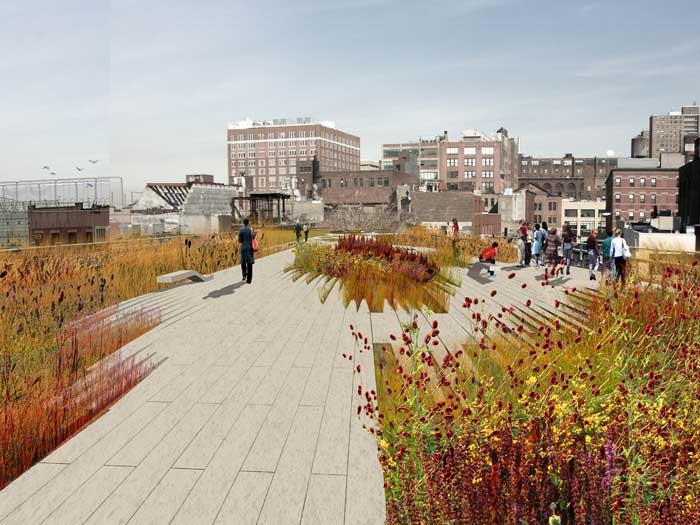
Design of Highline
Design of Highline

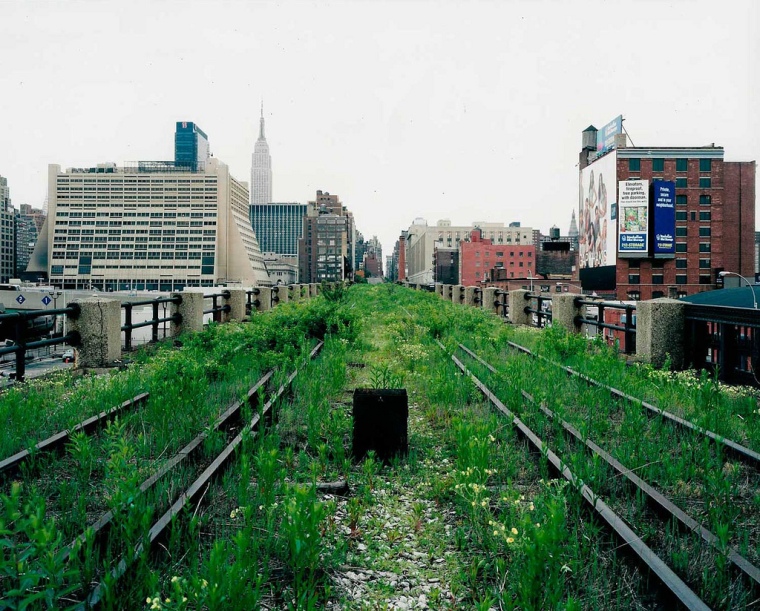
New York City has garnered international attention with its recent opening of the Highline park, which is a new public greenspace on an abandoned elevated rail line. The ‘park’ has a long history and is a testament to community organization and new, innovative visions for urban revitatalization and urban greening. The park has used a naturalized aesthetic to replicate the abandoned character of the line and encourage native habitat. For more information and pictures, click here.

View along the Highline